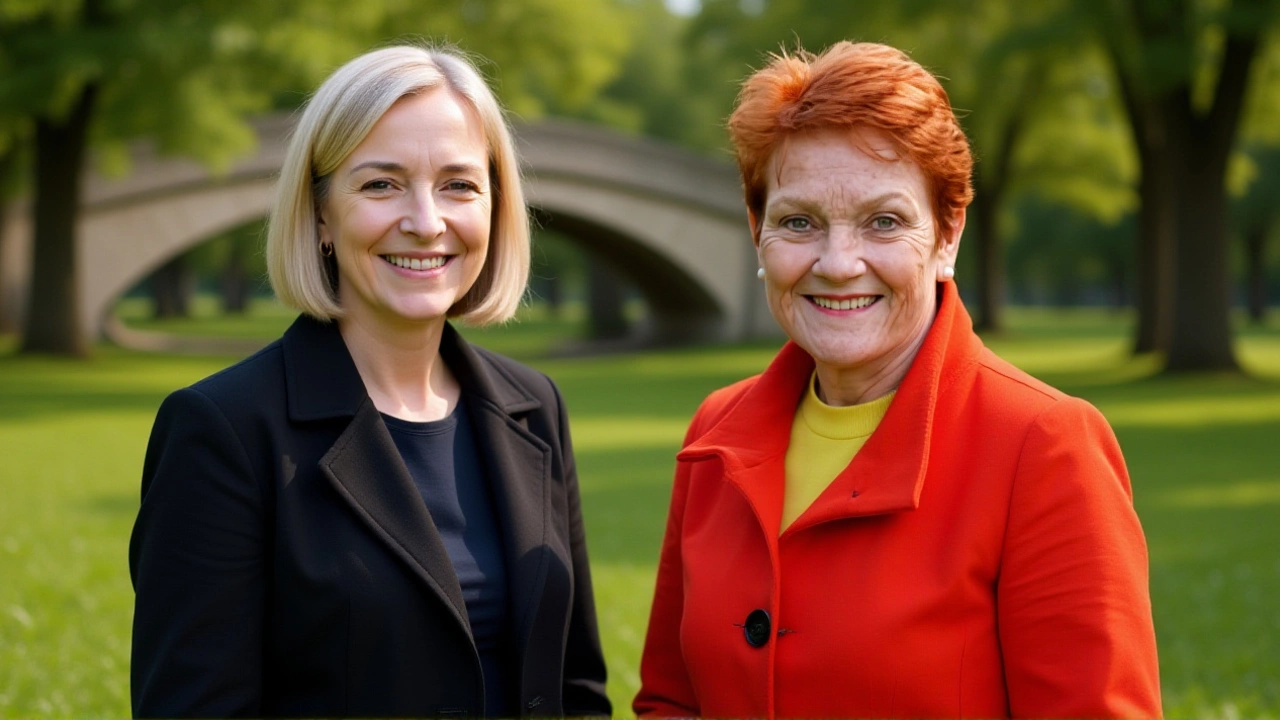
When Pauline Hanson stood before Australia’s Parliament in 1996, she didn’t just deliver a speech—she ignited a political wildfire. Her maiden address, laced with criticism of Indigenous policy and warnings about Asian immigration, sent shockwaves through the nation’s political class and media. What followed wasn’t just controversy; it was a financial windfall. In an election whose exact year remains unspecified in records, Hanson personally received 31.77% of the required quota of primary votes—far outpacing her own party, One Nation, which secured just 3.14%. That gap wasn’t just symbolic. It meant she recovered her election deposit and, crucially, triggered Australian Electoral Commission funding: $150,000 in public money, awarded because her personal vote exceeded the threshold—even as her party’s support lagged. The twist? She didn’t need the party to win. She just needed to be Pauline Hanson.
The Rise of a Political Outsider
Hanson’s 1996 speech didn’t emerge from a vacuum. It tapped into a simmering resentment among working-class white Australians who felt left behind by globalization, affirmative action, and what they saw as elite indifference. Her words found resonance in regional towns where factories had closed and jobs vanished. But they also triggered alarm bells in Canberra. Tim Fischer, then Deputy Prime Minister and Trade Minister, didn’t mince words: the ‘race debate’ Hanson had ignited was putting Australian exports and jobs at risk. Asian media outlets picked up the story immediately, and trade partners began asking uncomfortable questions. By December 1996, Hanson was already considering forming a party—backed by the far-right League of Rights, which offered not just money but organizational muscle.Legal Battles and Irony in the Courtroom
Hanson’s rise was never smooth. Her party’s registration faced legal challenges, and in 2003, she was convicted on charges related to fraudulent party registration. The court found she had misled the electoral commission about the party’s membership numbers. But here’s the odd part: those convictions were later quashed on appeal. Even more strangely, the funding convictions—based on the same facts—were also overturned. The courts essentially ruled that while the paperwork was messy, there was no criminal intent. The legal rollercoaster didn’t silence her. If anything, it made her a martyr in the eyes of her base. ‘They tried to bury us,’ she reportedly said, ‘but they didn’t know we were seeds.’
The Irony of the Campaign Event
One of the most jarring moments in Hanson’s career came during a campaign stop where the majority of attendees were of Asian origin. Vietnamese, Chinese, East Timorese, and Sri Lankan community leaders stood side-by-side with church groups, LGBTQ+ advocates, and socialist organizers. The platform wasn’t just diverse—it was a direct rebuke to the narrative she’d built. Yet Hanson didn’t walk away. She stood there, in front of them, and declared: ‘I don’t want all the hangers on. I don’t want the advisers and everyone else. I want it to be this time Pauline Hanson.’ The line wasn’t just a slogan. It was a manifesto. She wasn’t running a party. She was running a personality cult.What This Means for Modern Australia
Fast forward to 2025, and the political landscape has shifted. Indigenous leader Catherine Liddle, CEO of SNAICC, pointed to a different kind of voter uprising—one driven by young people and women demanding ‘a kinder, more compassionate Australia.’ Liddle didn’t mention Hanson by name, but her critique of Labor’s failure to address Aboriginal child removals and youth incarceration cuts to the heart of what Hanson’s brand of politics ignores: systemic inequality, not cultural scapegoating. Where Hanson built a movement on fear of the ‘other,’ Liddle’s movement is built on justice for the forgotten. The contrast couldn’t be sharper.One Nation still exists. It still wins seats. But its power now rests less on national appeal and more on regional pockets of discontent. The $150,000 funding Hanson received in the late 90s wasn’t just money—it was legitimacy. It signaled that even the most divisive voices could be financially rewarded by the system they claimed to hate. That’s the real legacy. Not the speeches. Not the convictions. But the precedent: that in Australian democracy, outrage can be bankable.
What’s Next for One Nation?
With no clear successor in sight and Hanson herself now in her late 60s, the party’s future hangs on whether it can outlive its founder. Her daughter, Jessica Hanson, has been rumored to be considering a political run—but that’s speculation. The official record, as provided, contains no confirmation. What’s certain is this: if One Nation survives, it won’t be because of policy. It’ll be because Pauline Hanson proved that in politics, sometimes the most powerful force isn’t an idea. It’s a name.Frequently Asked Questions
How did Pauline Hanson receive $150,000 in public funding without her party winning seats?
Under Australian electoral law, candidates who receive a certain percentage of primary votes (the quota) can recover their deposit and qualify for public funding—even if they don’t win. Hanson’s personal vote share of 31.77% exceeded the threshold, triggering $150,000 in funding, while her party, One Nation, received only 3.14%. The system rewards individual voter support, not just party performance.
Why did Tim Fischer say Hanson’s speech endangered Australian exports?
Fischer, as Trade Minister, feared Hanson’s anti-Asian rhetoric would damage Australia’s economic relationships with key trading partners like China, Vietnam, and Indonesia. Asian media coverage of her comments sparked diplomatic concern, and businesses warned of boycotts or reduced investment. In 1996, Asia accounted for over 40% of Australia’s exports—making racial rhetoric not just inflammatory, but economically risky.
Were Hanson’s legal convictions overturned because the system was flawed, or because she was innocent?
The convictions were quashed not because she was proven innocent, but because the courts found insufficient evidence of criminal intent. The paperwork errors in party registration were deemed administrative, not fraudulent. The funding convictions, based on the same facts, were also overturned—highlighting a legal inconsistency that many critics say exposed flaws in how political funding violations are prosecuted.
How does Catherine Liddle’s perspective contrast with Hanson’s political philosophy?
While Hanson’s politics center on exclusion and fear of cultural change, Liddle advocates for systemic reform to protect Aboriginal and Torres Strait Islander children from removal and incarceration. Liddle’s focus on compassion and equity reflects a growing voter demand for justice-based policies, directly opposing Hanson’s narrative of cultural threat. Where Hanson sees division, Liddle sees reconciliation.
Is One Nation still a major force in Australian politics today?
One Nation remains influential in regional Queensland and parts of New South Wales, holding seats in state parliaments and occasionally influencing federal outcomes through preference deals. But its national vote share has declined since its 1998 peak. Its survival now depends on Hanson’s personal brand and voter loyalty rather than policy appeal, making its future uncertain beyond her tenure.
Has Pauline Hanson ever publicly addressed criticism that she exploits racial tensions for political gain?
Hanson has consistently denied accusations of racism, framing her positions as ‘common sense’ and ‘protecting Australian identity.’ She often cites job losses and welfare strain as her motivators, not race. But critics point to her repeated use of loaded language around Islam and Asian immigration as evidence that her rhetoric is deliberately divisive—regardless of her stated intent.